CESifo Group Munich
The CESifo Group, consisting of the Center for Economic Studies (CES), the Ifo Institute and the CESifo GmbH (Munich Society for the Promotion of Economic Research) is a research group unique in Europe in the area of economic research. read on CESifo Group Munich
Münchner Seminar 24. Juni 2013
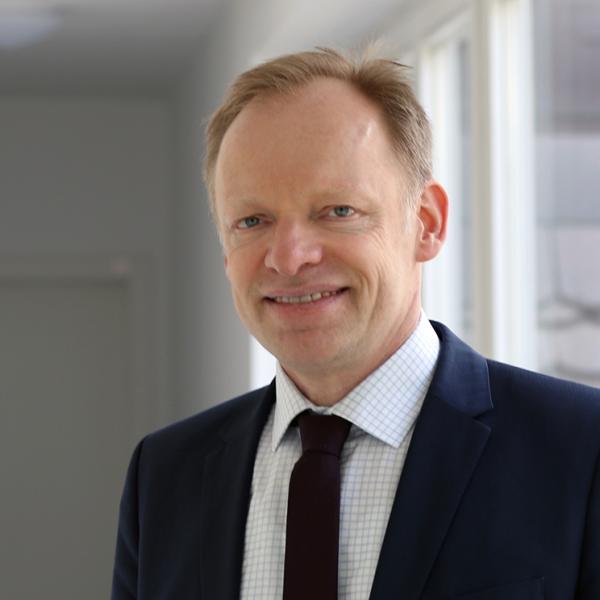
Prof. Kai A. Konrad
On Monday 24 June 2013, Prof. Kai A. Konrad is due to give a seminar entitled: “Die Europäische Schuldenkrise – die Rolle von Freiheit und Verantwortung”. The seminar will be given in German in the Ludwig-Erhard-Saal of the Ifo Institute. It is scheduled to begin at 6.00 p.m. read on Prof. Kai A. Konrad
Ifo Annual Meeting 2013
The 64th Annual Meeting of the Ifo Institute will take place on Wednesday, 26 June 2013, in the Grosse Aula of the Ludwig-Maximilian University of Munich.
The future of European integration depends largely on the extent to which the Monetary Union can be put on solid foundations. To contribute to a more objective public policy debate, the Ifo Annual Meeting will illuminate the scope for the development of the Monetary Union from different angles. read on Ifo Annual Meeting 2013
The 64th Annual General Meeting of the Ifo Institute will take place on 26 June in Munich. After the members’ meeting in the morning, the public part of the Annual General Meeting will highlight margins for manoeuvre in terms of the further development of European Monetary Union from various viewpoints. Speakers at the meeting will include Professor Dietrich Murswiek, University of Freiburg, Professor Otmar Issing, University of Frankfurt, and Professor Brun-Hagen Hennerkes, Stiftung Familienunternehmen.
Under certain circumstances the State of Saxony subsidises commuting costs in order to make employees more flexible. This implies a greater strain on public goods like transport. However, the price of the infrastructure required is paid by the municipalities, while commuters contribute very little. Instead they increase the funding received by their municipality of residence, since their registration of residence means that the community is ascribed higher financial needs in the municipal fiscal equalisation process, which results in many small and middle-sized communities in Saxony receiving slightly higher grants than may be appropriate. In the latest issue of ifo Dresden berichtet Jan Kluge and Christian Thater present their proposal for a corresponding correction.
The changed policy framework conditions and targets arising from the energy concept and turnaround in energy policy by the German federal government require the extensive coordination of innovation, energy and environmental policy. Otherwise losses in effectiveness and efficiency may occur, along with other undesirable side-effects. Taking the transformation of the energy system into account, ifo Forschungsbericht 61 documents the various forms of interaction between policy fields, assesses their impact and proposes measures for effective and efficient policy coordination.
The business climate improved significantly at the beginning of the second quarter of 2013 and has not been as favourable since the German reunification boom at the end of the 1990s, according to the remarkable results of the Ifo Institute's quarterly survey of freelance architects. The 15% increase in commercial contracts is particularly good for architects and almost compensated for the downturn in the public sector.
A new approach to regulation in the telecommunications sector has been discussed for several years whereby, instead of imposing a nationally uniform regulation, individual areas where competition is particularly intensive could be deregulated. Nadine Fabritz, a researcher in the Ifo Institute’s Human Capital and Innovation Department, and Oliver Falck, the department’s deputy head, have closely analysed the consequences of local deregulation of the broadband access market in the UK, which introduced local deregulation in 2008. They find that local deregulation has positive effects on infrastructure-based competition and, even by conservative estimates, that every service region tends to gain additional market participants with their own infrastructure.